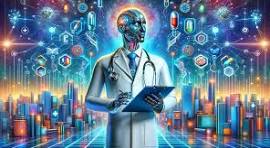
The Transformative Power of AI in Healthcare
Artificial Intelligence (AI) is no longer a futuristic concept in medicine — it’s a daily reality reshaping how we diagnose, treat, and care for patients. From accelerating drug discovery to improving diagnostic accuracy, AI is becoming a crucial ally to healthcare professionals worldwide.
🌡️ Early Diagnosis and Predictive Analytics
One of AI’s most profound impacts lies in its ability to detect diseases earlier and more accurately than traditional methods. Machine learning algorithms can analyze medical images, lab results, and patient histories to spot subtle patterns that may escape even experienced eyes.
-
Cancer Detection: AI-driven imaging tools like Google’s DeepMind and IBM Watson Health have achieved remarkable accuracy in identifying tumors from scans.
-
Predictive Health Models: Algorithms can assess risks for conditions like diabetes or heart disease long before symptoms appear, empowering preventative care.
This predictive power translates into faster interventions, improved patient outcomes, and reduced healthcare costs.
💊 AI and Drug Discovery
Developing new drugs typically takes years — sometimes decades — and costs billions. AI is speeding up that process. By analyzing massive datasets of chemical compounds and biological responses, AI systems can identify promising drug candidates in a fraction of the time.
For example, Insilico Medicine used AI to design a novel drug for fibrosis in just 46 days — a task that would normally take years. These breakthroughs make treatments more affordable and accessible, benefiting patients globally.
🧠 Personalized Medicine
AI allows healthcare to move from a “one-size-fits-all” model to a truly personalized approach. By integrating data from genetic tests, lifestyle factors, and medical history, AI can tailor treatment plans to each individual.
-
Pharmacogenomics: AI helps predict how a patient will respond to a specific drug, minimizing side effects and maximizing effectiveness.
-
Continuous Monitoring: Wearable devices powered by AI track vitals in real time, alerting both patients and doctors to any anomalies before they become emergencies.
🏥 Administrative Efficiency and Virtual Care
Beyond clinical care, AI is making hospitals and clinics more efficient. Chatbots, virtual assistants, and automated scheduling systems free up healthcare staff from repetitive tasks, allowing them to focus more on patients.
AI is also powering telemedicine platforms that make care accessible to rural and underserved communities. Virtual health assistants, for instance, can guide patients through post-surgery recovery or chronic disease management right from their homes.
⚖️ Challenges and the Road Ahead
Despite its promise, AI in healthcare faces hurdles: data privacy concerns, algorithmic bias, and the need for transparent regulation. Ensuring ethical use of patient data and maintaining human oversight are essential to building trust in AI-driven medicine.
Still, as AI continues to evolve, the balance between human empathy and machine precision could define a new era of healthcare — one that’s faster, smarter, and more compassionate.
🌍 Conclusion: AI as the New Partner in Health
AI isn’t here to replace doctors — it’s here to empower them. The combination of human expertise and machine intelligence is creating a healthcare ecosystem that’s more efficient, predictive, and inclusive. The future of medicine isn’t just digital — it’s intelligent.